
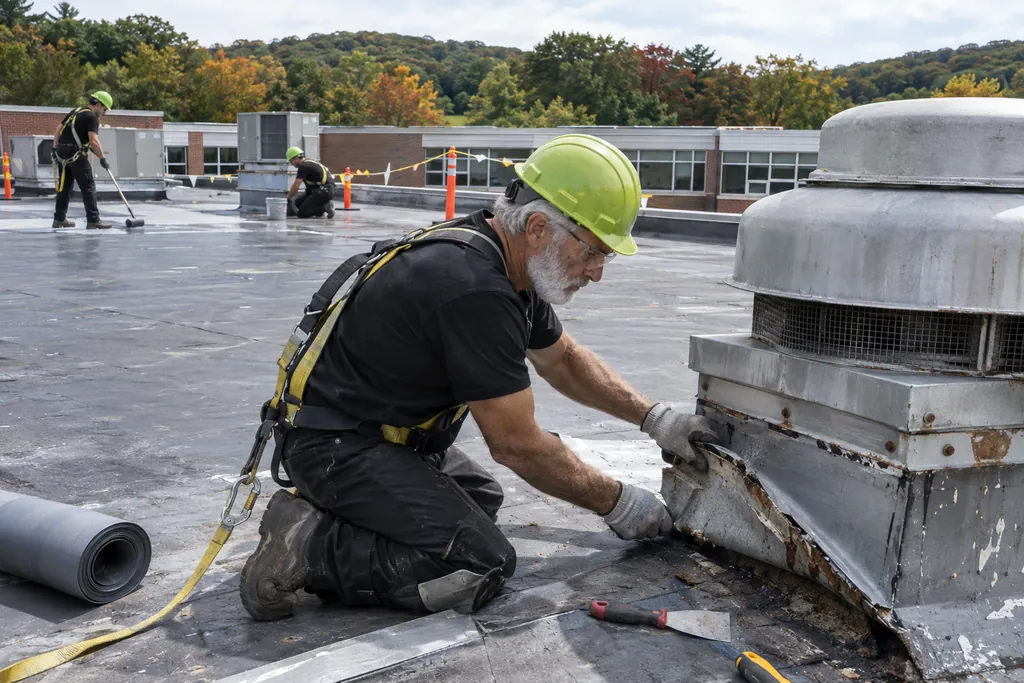
Industrial Roof Repair
Production roofs with fans, stacks, and conduit get curb and flashing work timed to lockouts.
Industrial Roof Repair in Waterbury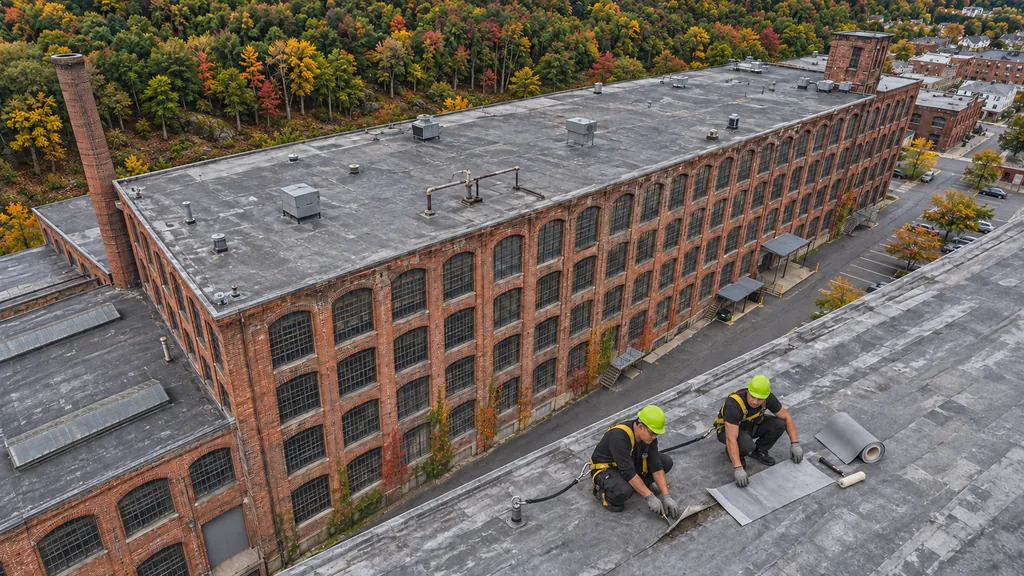
Watertown commercial roof repair for manufacturing plants is planned with plant staff, so fans, intakes, and production lines keep running while we work above them.
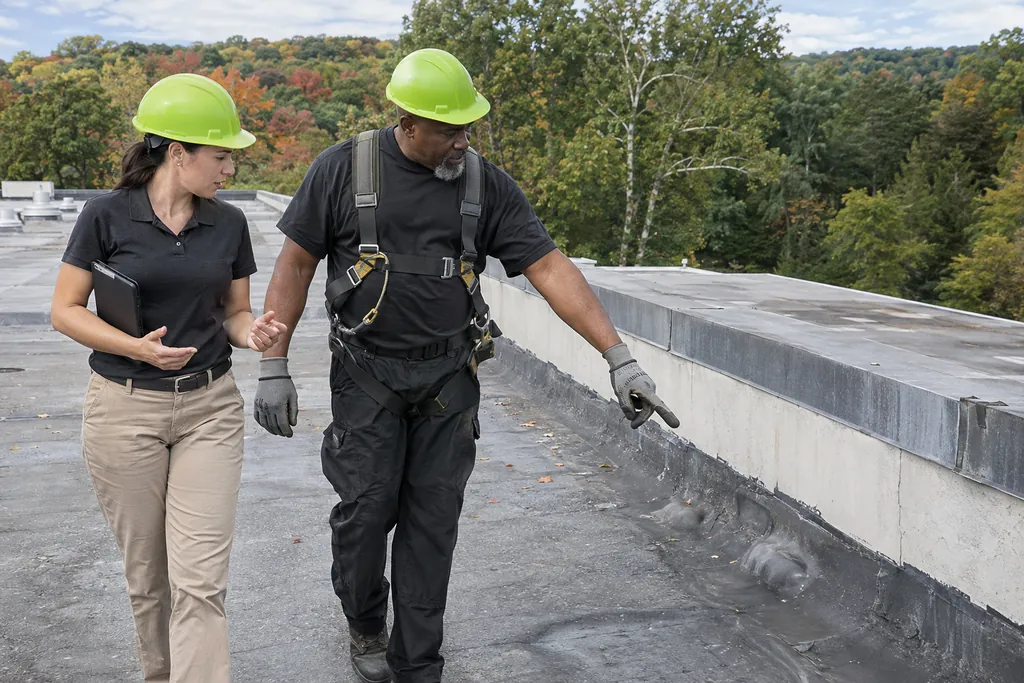
Watertown commercial roof repair often happens above machining, molding, or assembly lines that keep running while a roof crew works overhead.
We meet with maintenance first to agree on which fans can be locked out and when, where crews may stand near exhaust, and where material can be lifted without crossing truck traffic.
Plant roofs crowd a lot of equipment into each zone, so each gets checked around what is running.
Parapets beside exhaust stacks dry out and crack faster than the rest of the wall. Coping and base flashing near stacks get checked on every visit.
Service traffic to fans and units wears the field membrane thin along the same routes. Walkway pads go down after the worn sections are patched.
Dust from production settles in roof drains and slows them after every storm. Strainers get cleared, and drain flashing gets checked for grease.
Exhaust fans, makeup air units, and stacks each break the membrane. Curbs get reflashed only after plant staff lock out the fan.
Rooftop compressors shake the insulation boards and deck screws beneath them. Soft spots around equipment get cored and repaired.
These failures come with running equipment, and each repair is timed to it.
Discharge from process fans breaks down asphalt and rubber membranes near the curb.
The damaged sheet is replaced with a membrane suited to that exhaust, and the curb is reflashed.
Large units shake their curbs until the corner flashing splits.
Corners get new flashing, and the curb is refastened to the deck.
Some leaks sit right at fans that can stop only for short windows.
Repairs are staged so the work at each fan fits inside its lockout window.
Settled dust turns roof drains into slow pools after every storm.
Drains are cleared, reflashed, and added to the plant's cleaning checklist.
Runoff from the main roof lands on dock canopies and wears through at one spot.
A reinforced patch or splash pad goes at the landing, and the canopy gutter is resealed.
Plant roofs in Watertown usually need more than one of these.
Production roofs with fans, stacks, and conduit get curb and flashing work timed to lockouts.
Industrial Roof Repair in Waterbury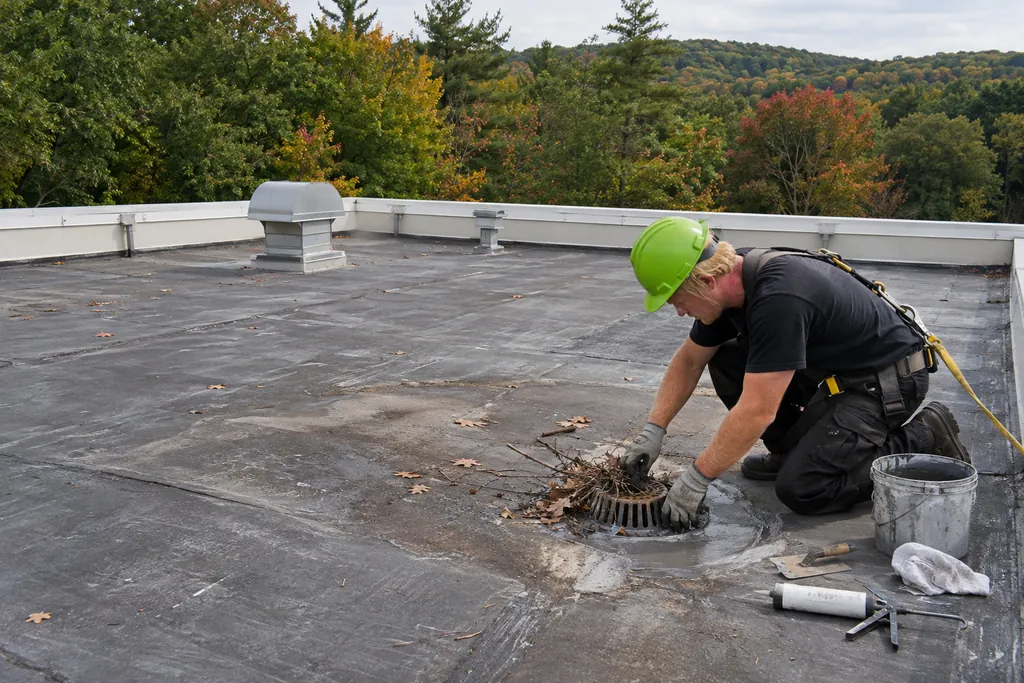
Offices, labs, and shipping wings beside the plant get flat membrane repairs at seams and drains.
Flat Roof Repair in Waterbury
Drips over production lines get traced from inside before any part of the roof is opened.
Commercial Roof Leak Repair in WaterburySend us what sits under the leak and your next shutdown window, and we will plan the visit with your maintenance lead.
Four decisions keep the roof work inside the plant's routine.
A maintenance escort walks the roof with us while we check membrane, curbs, drains, and every penetration, plus the deck from inside.
Fans, intakes, and lines that stay on are marked on the roof plan, and repairs near them get their own windows.
Lifts, material, and debris chutes are placed away from truck traffic and exhaust, with plant staff approving each spot.
Each fan comes back on after its repair, and the roof plan shows what was fixed and what comes next.
Plants and shops around Watertown fall within the towns below. If yours sits farther out, call us or send us a message.
Yes. Metal roofs on Watertown plants and manufacturing buildings get new fasteners, resealed laps, and cut-in panels where rust has gone through. The work is scheduled around production and rooftop equipment, and we also repair flat sections and the flashing where metal meets walls or lower roofs.
A pre-job meeting on lockouts and staging, a roof walk with maintenance, and repairs grouped by which equipment has to stop. Leaks over production get fixed first; wear that can wait goes on a planned list for later visits.
Ask how they handle lockouts, intake protection, and hot work near production, and whether they follow your plant's safety rules on the roof. Ask for photos and a marked roof plan along with the written price.
Most can. Quiet work away from fans and intakes goes on during shifts. Work at locked-out equipment, or with adhesives near intakes, moves to breaks, shift changes, or weekends.
Yes. Crews follow the plant's rules for roof access, lockout, hot work, and escorts. We send the work plan ahead so your safety lead can review it before the first day on the roof.
Yes. Dock canopies and the roofs over shipping areas take forklift exhaust, truck traffic below, and runoff from the main roof. We repair their edges, drains, and laps, with lifts placed so the docks keep moving.
Tell us about the plant, the roof, and your shutdown windows, and we will plan the repair around production.