
If Your Roof
A Stain That Grows Only in Wind-Driven Rain
Rain blowing sideways gets past counterflashing, coping joints, and wall vents that stay dry in calm storms.
Start WithWall and Coping Leak Repair
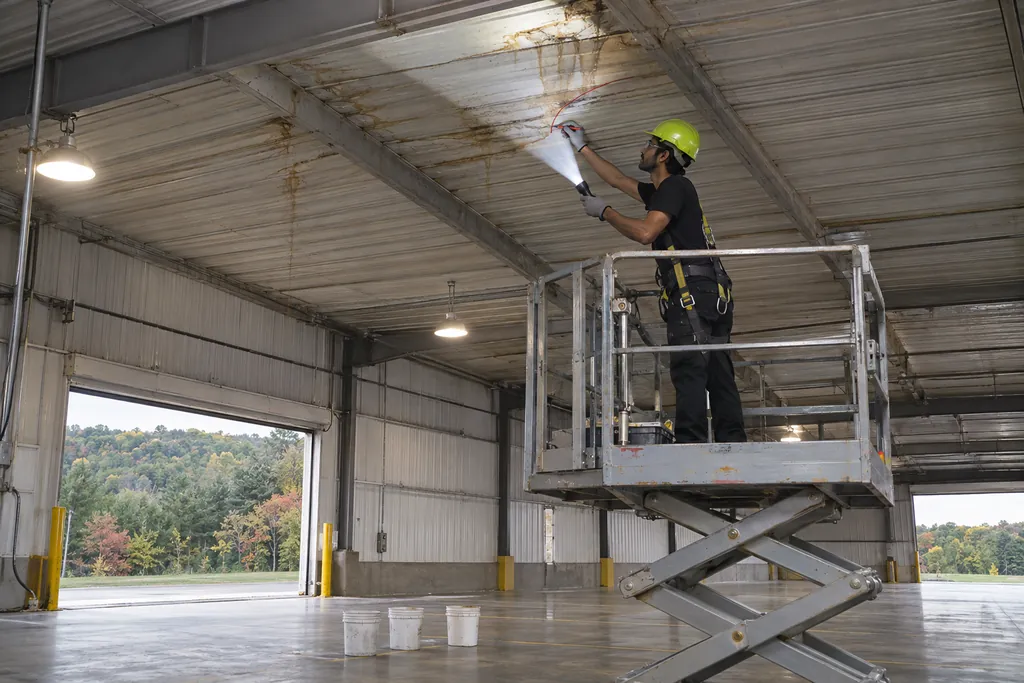
As a Waterbury commercial roof leak repair contractor, we trace water from the stain inside to its entry point on the roof, then repair that spot.
Waterbury commercial roof leak repair is the right first step when water shows up inside and the cause stays hidden from the roof surface.
Rain blowing sideways gets past counterflashing, coping joints, and wall vents that stay dry in calm storms.
Curb flashing, loose unit panels, and condensate lines draining onto the roof all feed water down the curb.
Snowmelt that refreezes at drains and parapets backs up under laps that shed rain fine.
Moving leaks across many bays usually mean worn membrane or wet insulation everywhere, more than patches can keep up with.
Leaks enter through five zones of a roof, and the stain inside rarely sits right under the source.
Coping joints, edge metal, and through-wall flashing let water into the wall cavity, so stains show up along exterior walls first.
Open laps and punctures in the field drain along the deck flutes, so water can surface one or two bays away from the hole.
A drain bowl that leaks at its clamping ring drips straight down the pipe and shows up at the nearest column or ceiling grid.
Unit curbs, pipe boots, and exhaust fans cause many leaks because each one breaks the membrane with its own flashing.
Wet insulation holds water and lets it go slowly, which explains leaks that keep dripping for days after the rain stops.
These methods narrow a leak down to one detail before anything gets cut.
We mark each stain, check the deck above it, and follow the slope uphill on the roof to the likely entry.
A moisture meter maps wet insulation, and a core cut confirms what the meter shows before any board comes out.
Water is run on one detail at a time, such as a curb or a lap, while someone watches inside for the drip.
Each entry point is photographed before and after repair and marked on a roof plan you keep.
Each leak source has its own repair, and these are the four we fix most.
Unit drain lines dump water beside the curb, and it finds every open lap nearby.
Lines are routed to a drain, and the curb flashing is resealed or replaced.
Counterflashing pulls out of its reglet, and wind pushes rain behind the base flashing.
Counterflashing is reset and sealed, and the base flashing gets new laps at the wall.
Loose bolts or a torn membrane at the ring let water down the outside of the pipe.
The clamping ring is reset with new bolts, and the membrane flashing at the bowl is replaced.
Old skylights crack at their curbs and frames, and drips land right below them.
Curbs are reflashed, and cracked skylight frames or domes are replaced.
Move what you can, then tell us where the water lands, and we will plan the first roof visit around that spot.
Four decisions take a leak from the bucket to a finished repair.
The visit starts inside at the stain, then moves to the roof to check every seam, curb, drain, and flashing upslope of it.
Moisture readings, core cuts, and water tests on single details confirm where water gets in before anything is cut.
In ice or high wind a temporary seal comes first. The permanent repair follows once the roof is safe to work on.
After the repair, we water-test the detail where possible and note it on the roof plan, so the next rain tells you something useful.
Once the source is found, the repair usually falls under one of these.
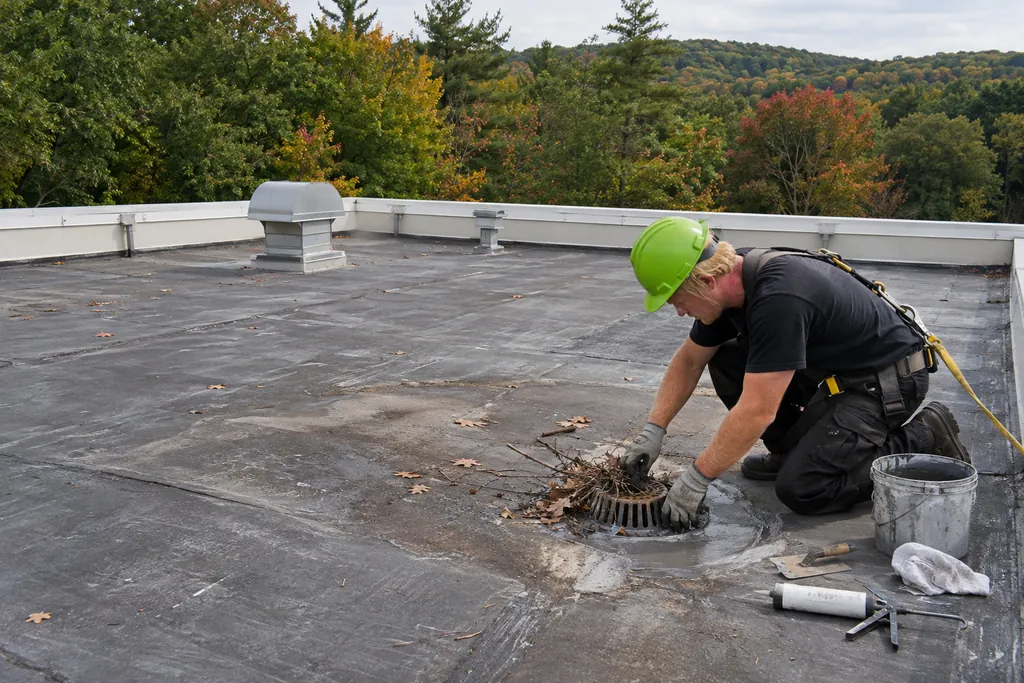
Entry points in membrane seams, drains, and wall flashing get flat roof repair.
Flat Roof Repair in Waterbury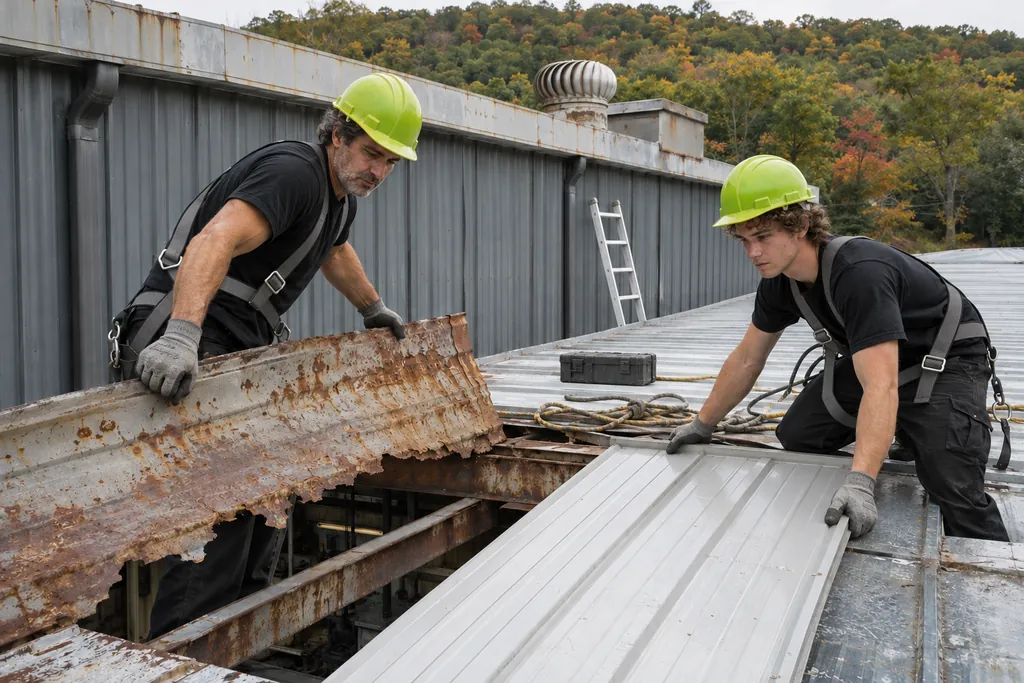
Leaks traced to screws, laps, or trim on a metal roof get fastener and lap repairs.
Commercial Metal Roof Repair in Waterbury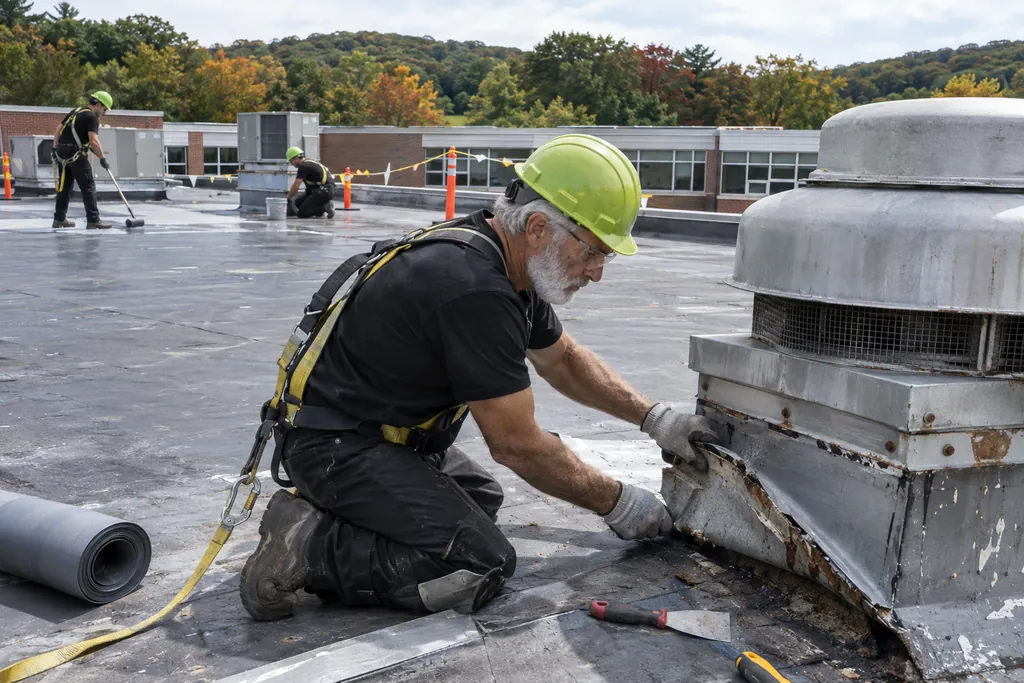
Sources at fan curbs or process penetrations on plant roofs get repairs scheduled with production.
Industrial Roof Repair in WaterburyLeak repair cost turns on how hard the source is to find, how much damage the water has done, and what the fix requires. One failed flashing is a smaller job than a leak that soaked insulation across a bay. Roof access, height, roof type, and interior protection also change the price, so we price after the inspection.
Inside first: we mark where water shows up and check the deck above it, then trace upslope on the roof to the likely entry. Seams, flashings, curbs, drains, and penetrations get checked first. Water travels along the deck before it drips, so the entry can sit well away from the stain; moisture testing or core cuts map any wet insulation.
Most rooftop unit leaks come from failed curb flashing, open seams in the unit housing, loose access panels, or a condensate line draining onto the roof. Curbs too short for the insulation let snow and water reach the flashing top. We check the curb, flashing, and housing, fix the source, and raise low curbs where needed.
The lease decides that. Leak repairs can fall to the landlord or the tenant, or be split between routine repairs and structural work, based on the wording. Check who the lease names for roof leaks, and ask your attorney or property manager if it is unclear. We make the repair for whichever party approves the work.
Protect people and equipment first: move what you can, cover the rest, and set out buckets. Keep staff off the roof in high wind, ice, or heavy snow. Note where water comes in, take photos, and call to set up the repair. When conditions are safe we place a temporary seal if needed, then the permanent repair.
Tell us where the water shows up inside, and we will trace it to the roof and price the repair.