
If Your Roof
A Puncture From Foot Traffic Near the Hatch
One hole in otherwise flexible membrane takes a matched patch, primed and rolled or heat-welded.
Start WithField Patch
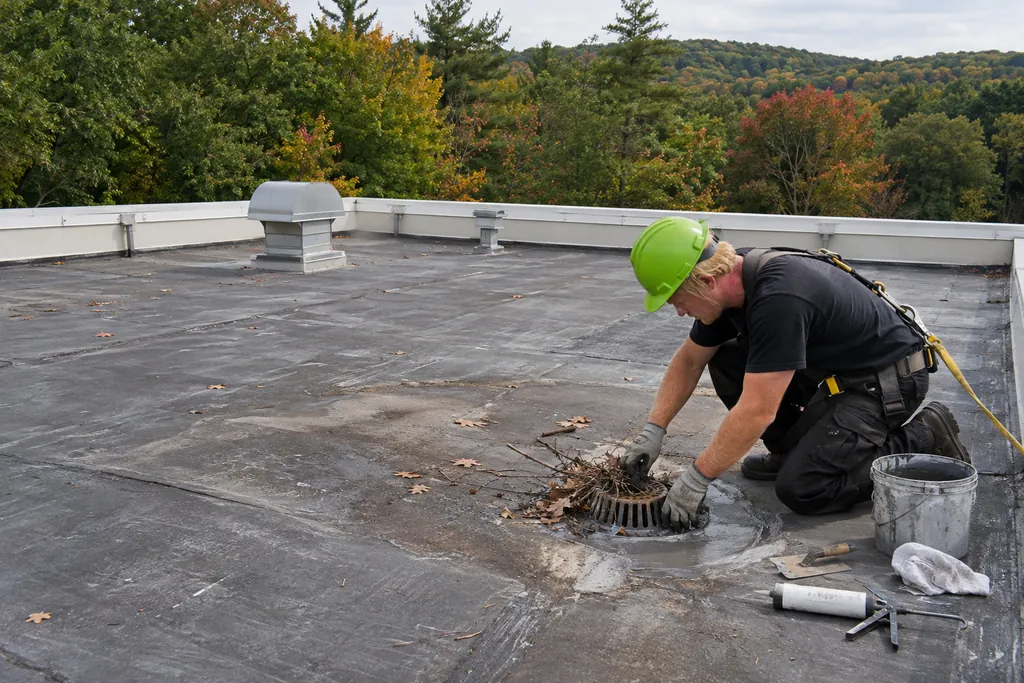
As a Waterbury flat roof repair contractor, we fix open seams, failed drains, and wall flashing on built-up, EPDM, TPO, and modified bitumen roofs.
Waterbury flat roof repair works when the membrane still bends without cracking and the problems stay in certain spots. Here is how four common cases start.
One hole in otherwise flexible membrane takes a matched patch, primed and rolled or heat-welded.
Water that sits for days after rain needs the drain cleared and the low area built up.
Lifted laps at the wall usually come with tired base flashing, so both get stripped in together.
Membrane pulling away from the edges and cracking at every fold has run out of repair life.
Low-slope roofs fail in the same five zones, and each zone gets its own repair.
Base flashing pulls off brick and block walls as the building moves, and termination bars loosen. We strip in new flashing and reset the bar.
Laps on EPDM and modified bitumen open after years of freeze-thaw. TPO seams get rewelded; adhered sheets get cleaned, primed, and taped.
Strainers fill with leaves and grit, and clamping rings loosen. A drain that sits above the roof leaves a pond that never fully drains.
Pitch pockets dry out and crack, and pipe boots split in the cold. We replace them with prefabricated boots or new sealant pockets.
Ponded areas often hide crushed or wet insulation beneath. Soft spots underfoot are cored, and wet boards are replaced before patching over them.
The repair method follows the membrane already on the roof.
Thermoplastic membrane is cleaned, then a new sheet is hot-air welded over the damage and probed along every edge.
Rubber roofs get primer and seam tape or cured cover strips, sized well past the tear so the lap has room to hold.
Torch-applied or cold-adhered cap sheet goes over a cleaned, dried area, with granules matched to the surrounding roof.
Strainers, clamping rings, and drain flashing are replaced, and tapered insulation brings low drains back into the water path.
Flat roofs fail in a handful of ways, and each one has a repair that matches it.
Water that freezes in a low spot expands and pulls at the laps around it.
The drain path is cleared, and the low area is built up with tapered insulation or a cricket.
Pockets of air or vapor lift the membrane and crack as they flex underfoot.
Each blister is cut open, dried, and patched, and the board under it is checked for moisture.
Adhesive gives out with age, and the flashing sags away from the parapet.
Old flashing comes off, new flashing is adhered or welded, and a termination bar locks the top edge.
Rubber boots harden in the cold and crack where the pipe meets the roof.
A new boot or flashing sleeve is set over the pipe and lapped into the membrane.
Send a few details about the ponding and the building, and we will set up a visit to check the drains and the membrane around them.
Four decisions shape every flat roof repair, in this order.
We walk the field and edges, probe the seams, check each drain, and core any soft areas to learn whether the insulation is dry.
Small openings get patched. Larger failed areas get cut out and replaced, and ponding gets drain or taper work before new membrane goes down.
Hot-air welding and adhesives are scheduled with roof access, air intakes, and building hours in mind, and material is staged away from drains.
Finished seams are probed, drains are run with water where possible, and the repairs are added to your roof plan with photos.
Flat roof problems often sit next to one of these.
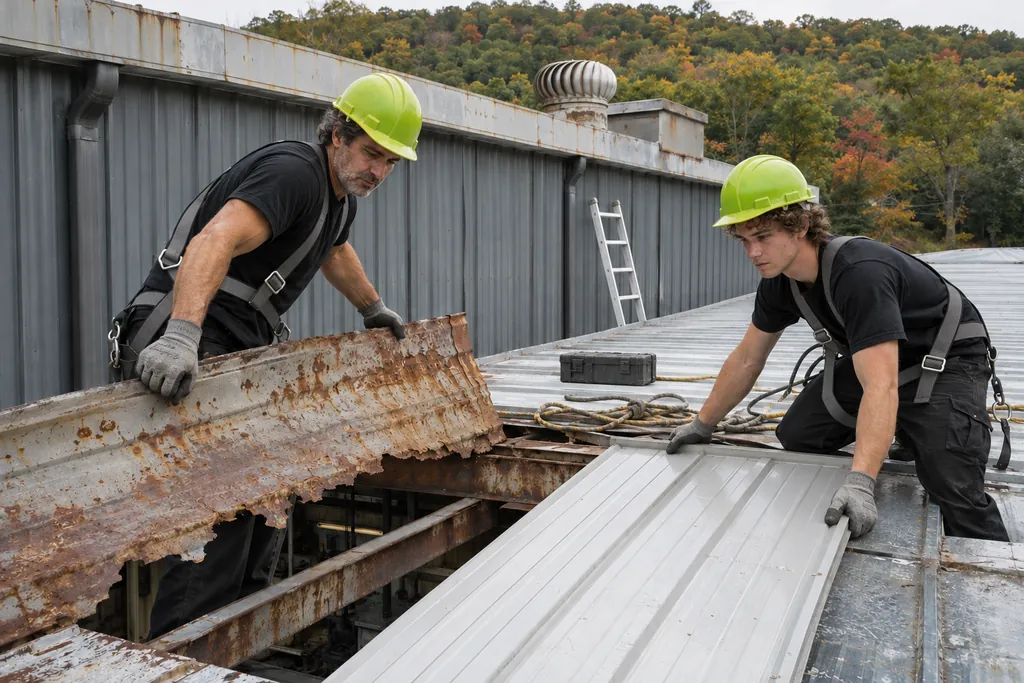
Buildings with a metal shop roof beside a flat office roof often need both repaired at the joint between them.
Commercial Metal Roof Repair in Waterbury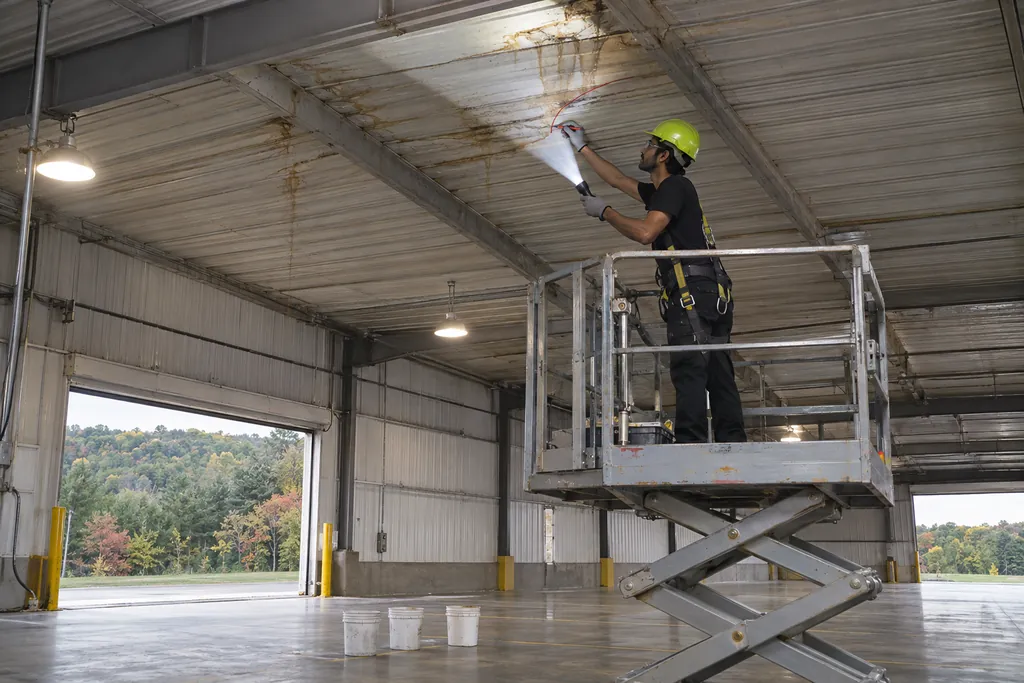
When the stain inside does not line up with damage you can see on top, leak tracing comes first.
Commercial Roof Leak Repair in Waterbury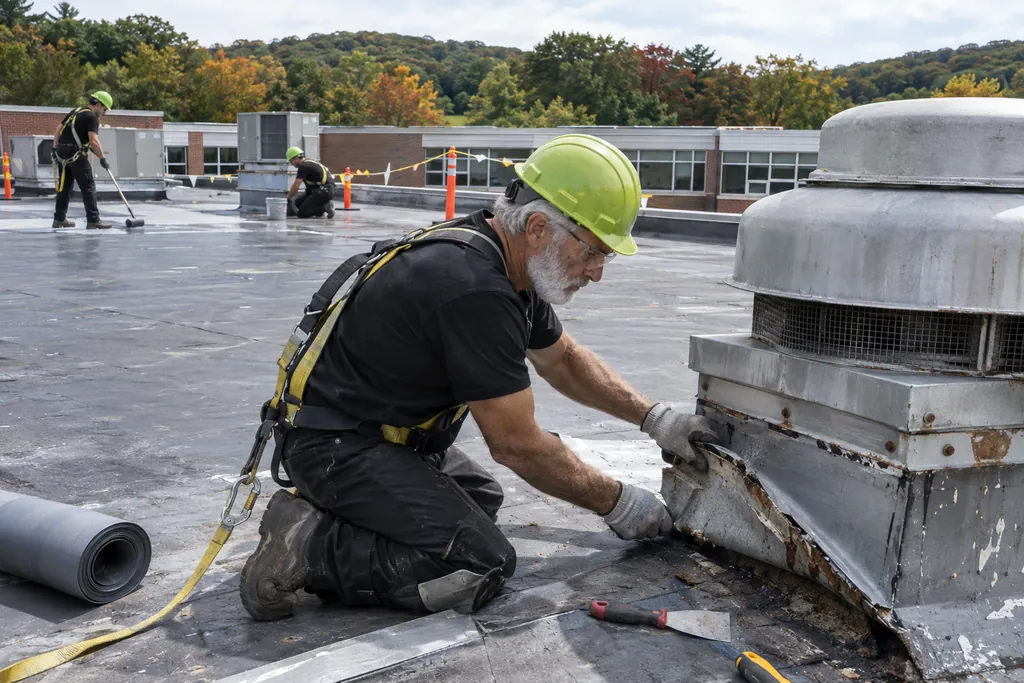
Plant roofs with fans and piping on a flat membrane get repairs timed around production and lockouts.
Industrial Roof Repair in WaterburyPrice follows the membrane type, the size of the damaged area, and whether the insulation under it got wet. Work at drains, walls, and rooftop curbs takes longer than an open-field patch, and ponding that needs taper or drain work adds to it. Roof access and the number of roof layers matter too.
First we find out why the water sits there: a plugged or high drain, a sagging deck, or crushed insulation. Then the drain gets cleared or reset, tapered insulation or a cricket moves water toward it, and the ponded membrane gets repaired. Fixing drainage keeps winter ice from working on the seams.
A patch handles a puncture, a short open lap, or one failed flashing on a roof in otherwise good shape. Leaks that keep turning up in new places, cracked or shrunken membrane over wide areas, or wet insulation point to section repairs or replacement instead of more patches.
The drain is cleared, the bowl, clamping ring, and strainer are checked, and the membrane flashing around it is redone. A drain sitting above the roof around it gets tapered insulation so water reaches it. Drains by parapets and shaded walls freeze first, so we also look at whether a second drain or scupper would help.
Freeze-thaw cycles move the membrane and the deck under it, which pulls weak seams apart and splits older sheets. Blisters grow where trapped air or moisture expands. We open and patch blisters, reweld or reseal seams, and check the insulation for moisture so wet board stays out from under the new patch.
Tell us where water stands or drips, and we will check the drains, seams, and flashing on your flat roof.