
Flat Roof Repair
Built-up and modified bitumen roofs over brick buildings get patched, reflashed, and drained.
Flat Roof Repair in Waterbury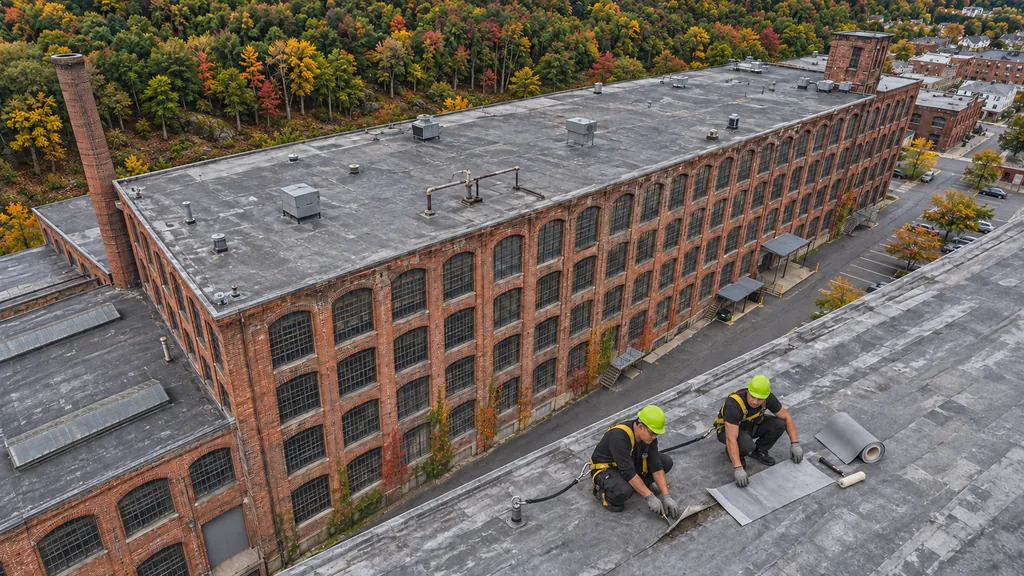
We handle Naugatuck commercial roof repair on older brick factories and mill buildings, where years of patches have to be tested before new work goes on.
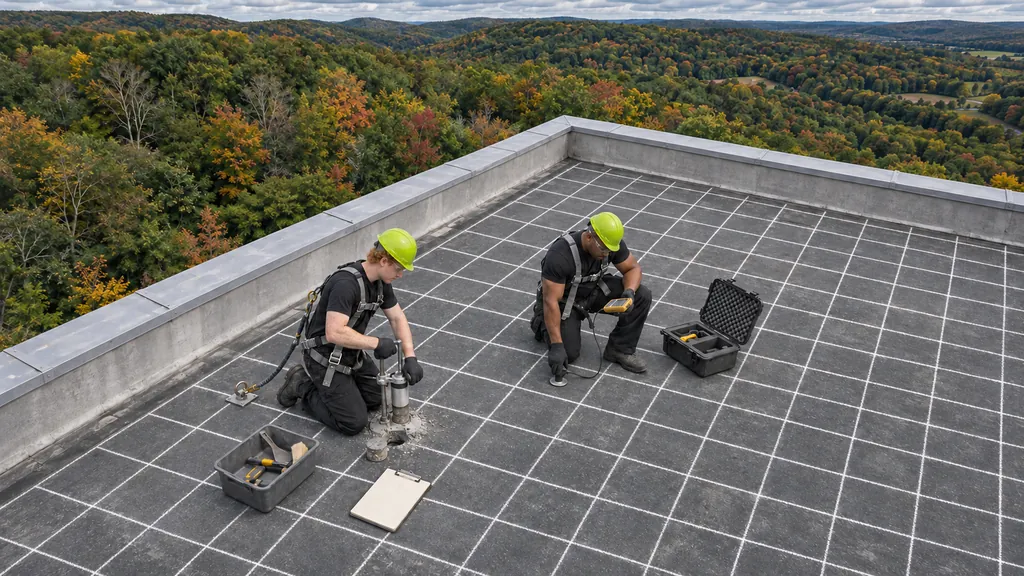
Naugatuck commercial roof repair often starts on roofs that already carry several generations of fixes: mastic over tar, cap sheet over that, and a few metal sheets screwed down at the edges.
New material holds only when it bonds to something solid, so we cut a core to count the layers, pull a test strip, and remove loose patches before the repair goes on.
Every zone on an older factory roof hides a different past repair, so each one gets its own look.
Brick parapets here often carry several coats of roof cement over cracked flashing. We strip back to solid flashing and tie new base flashing into the wall.
Patches stacked on patches leave ridges that trap water in the field. Thick buildup gets cut down flat, so the next patch lies tight to the roof.
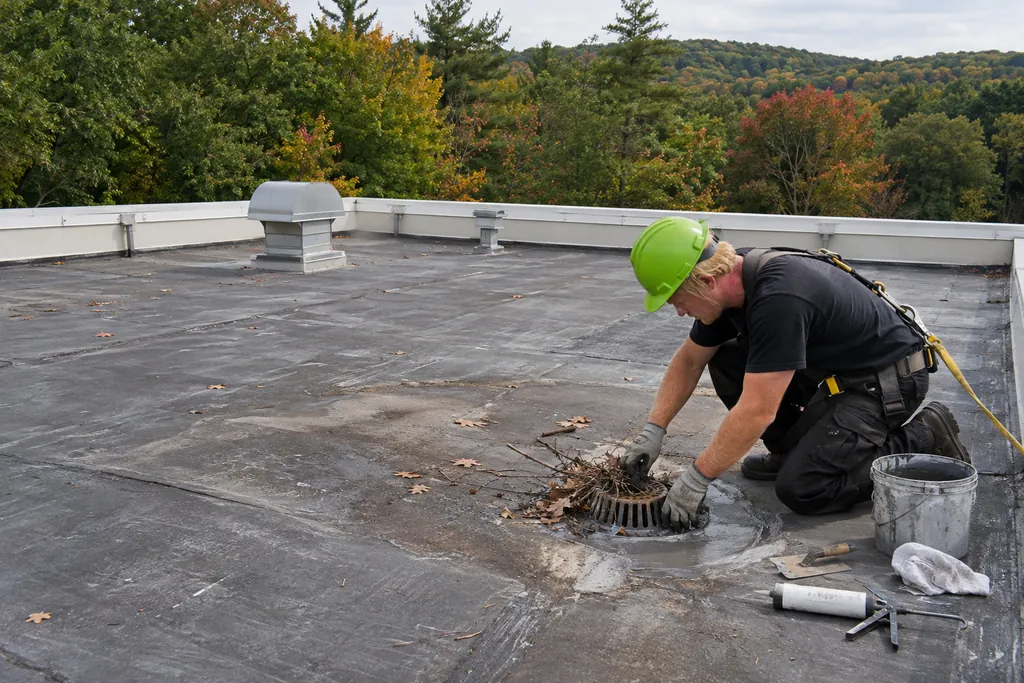
Old roof drains end up buried under layers of reroofing, set low in a hole of their own. Extension rings and new clamping rings bring them back to the surface.
Abandoned vents and old equipment curbs stay on many mill roofs long after the machinery left. Unused openings get removed, decked over, and patched in.
Layered roofs can hide wet felts and soft insulation below the top sheet. Core cuts tell us how deep the wet goes before we price the repair.
Older factory roofs fail in their own ways, and each has a repair that suits the layers underneath.
Cold patches dry out, curl, and let water slide under them in the next rain.
The old mastic is scraped off, the area is primed, and a membrane patch is set wide of the damage.
A new sheet laid over a weak older layer peels away as that layer fails.
The loose layer is cut out down to a firm one, and the repair is built back up from there.
Coats of cement crack in winter and send water down behind the brick.
Cement comes off, the flashing is replaced, and a termination bar or counterflashing closes the top.
Each reroof raised the roof around the drain, leaving a pond at the bowl.
Drain extensions and new flashing raise the bowl so water reaches it again.
These services come up most on older Naugatuck factory and mill roofs.
Built-up and modified bitumen roofs over brick buildings get patched, reflashed, and drained.
Flat Roof Repair in Waterbury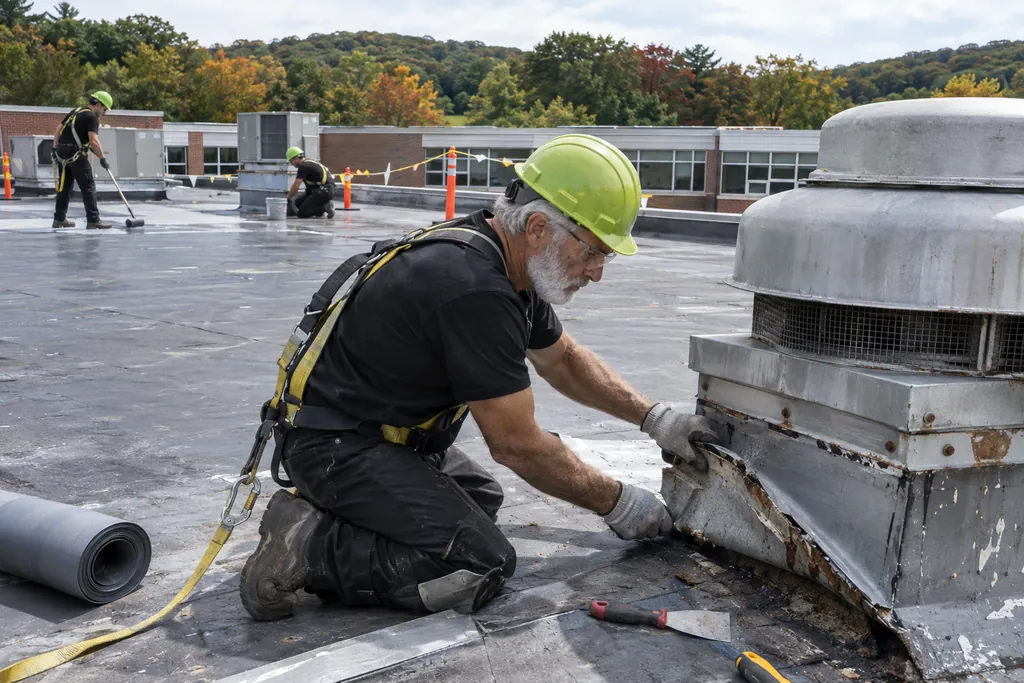
Mill buildings still running machines get repairs around fans, stacks, and old process curbs.
Industrial Roof Repair in Waterbury
Leaks that wander through layered roofs get traced from the stain before any patch goes down.
Commercial Roof Leak Repair in WaterburyTell us roughly how old the roof is and how many repairs you know of, and we will plan core cuts into the first visit.
Older roofs need a few extra decisions before the repair goes on.
We walk the roof, note every old patch, and cut cores to count the layers and check how dry each one is.
Patches that still bond stay. Loose ones come off, and soft layers get cut down to firm material before anything new is installed.
New membrane is primed and lapped onto a tested surface, with flashings carried up the wall past the old cement line.
Photos and a marked plan show what sits under the roof now, which saves the next repair from guessing.
Beyond Naugatuck, we repair commercial roofs in the towns below. Somewhere else? call us or send us a message.
Yes. Flat roofs on Naugatuck shops, warehouses, and plants are a large share of the work there. We trace the leak to its source, repair the membrane, seam, or flashing, and check that the drains move water off. Wider problems get explained, with options, before any work starts.
The size of the repair, how many old layers sit under it, and whether any of them are wet. A patch on a single-layer roof costs less than cutting through three layers to reach dry material. Access, roof height, and flashing work at walls also move the price.
Flat membrane and built-up roofs, metal panels, leak tracing, and plant roofs with fans and curbs. Most jobs are on working buildings, so we plan access, noise, and material staging with the owner or tenant before the crew arrives.
Ask how they will find the source, whether they cut cores on layered roofs, and what record you get afterward. A clear written price, photos of the problem, and a marked roof plan make it easy to compare one proposal with another.
Yes, once the surface is ready. Loose gravel and dried mastic come off, the area is cleaned and primed, and the patch is chosen to match the old roof. Where the top layer is weak, we cut down to a firm one first.
Tell us about the roof and its past repairs, and we will set up a visit with core cuts and a written repair price.