
If Your Roof
Grease or Residue Around an Exhaust Fan
Discharge from process fans softens many membranes and opens the flashing at the fan base.
Start WithFan Curb Rebuild
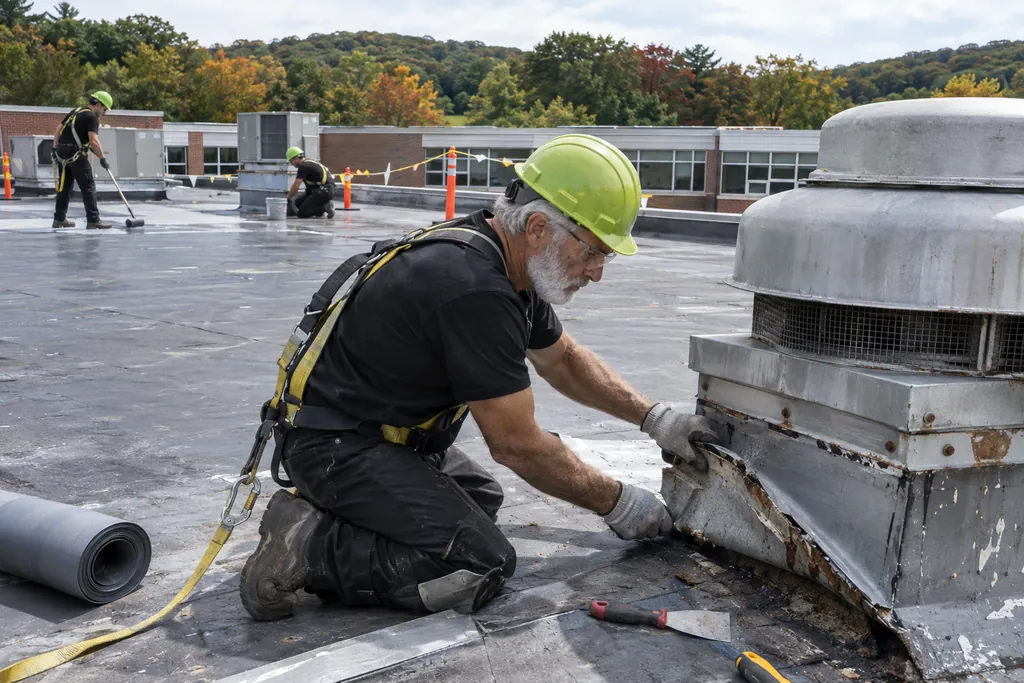
As a Waterbury industrial roof repair contractor, we repair membranes, curbs, and flashings on plant roofs while working around fans, piping, and production.
Waterbury industrial roof repair begins with the equipment on the roof, because most plant leaks start where something passes through the membrane.
Discharge from process fans softens many membranes and opens the flashing at the fan base.
Pipes resting on blocks wear through the sheet as they move with temperature swings.
Maintenance traffic to units and fans scuffs the membrane until it splits along the path.
Corroded deck flutes or soft spots under equipment mean structural work has to come before any roof repair.
Plant roofs carry more penetrations than most, so each zone below gets its own check.
Parapets on older plants hold loose coping and patched wall flashing. Heat from nearby stacks dries those patches out faster.
Field membrane takes foot traffic, dropped tools, and dragged equipment. Splits and punctures cluster along the paths crews use most.
Drains near loading docks and roof edges collect grit and process dust, and clogged strainers turn into ponds that sit for days.
Exhaust fans, makeup air units, stacks, and conduit crowd the roof, and each carries its own curb or boot flashing.
Vibration from fans and compressors loosens deck fasteners and cracks insulation boards under the membrane over time.
These repairs come up on almost every plant roof we walk.
Fan curbs get rebuilt or reflashed with membrane rated for what the fan blows out, and the base is sealed against vibration.
Areas near process exhaust get patches in a membrane suited to that exposure, cut well past the damaged area.
Pads laid along service routes keep maintenance traffic off bare membrane between units and fans.
Every curb, drain, edge, and penetration is checked, photographed, and marked on a roof plan sorted by urgency.
Industrial roofs wear out in ways that office roofs rarely see.
Oils and process exhaust break down rubber and asphalt membranes around the fan.
The damaged area is cut out and replaced with a membrane that holds up to that discharge.
Fans and compressors rattle curb flashing until it splits at the corners.
Curbs are refastened, corners get new flashing, and vibration pads go under the equipment where they help.
Repeated foot traffic and dragged parts wear through the cap sheet or membrane.
Worn spots are patched, and walkway pads keep the next trips off the membrane.
Dust and grit from production settle in strainers and slow drainage after every storm.
Drains are cleared and reflashed, and a cleaning schedule goes on the roof plan.
Let us know what sits under the leak and when equipment can be shut down, and we will plan the visit with your maintenance team.
Four decisions keep repairs moving without stopping the plant.
We check membrane, curbs, drains, edges, and every penetration, and look at the deck from inside the plant where it is reachable.
Leaks over production, electrical gear, or stock go first. Wear that can wait gets grouped into a planned list.
Fan shutdowns, hot work, and adhesive use near intakes are scheduled with plant staff, with crews and material kept clear of exhaust.
Repairs go in, curbs and flashings are checked, and the roof plan is updated so maintenance knows what changed.
Plant buildings usually mix roof types and leak sources.
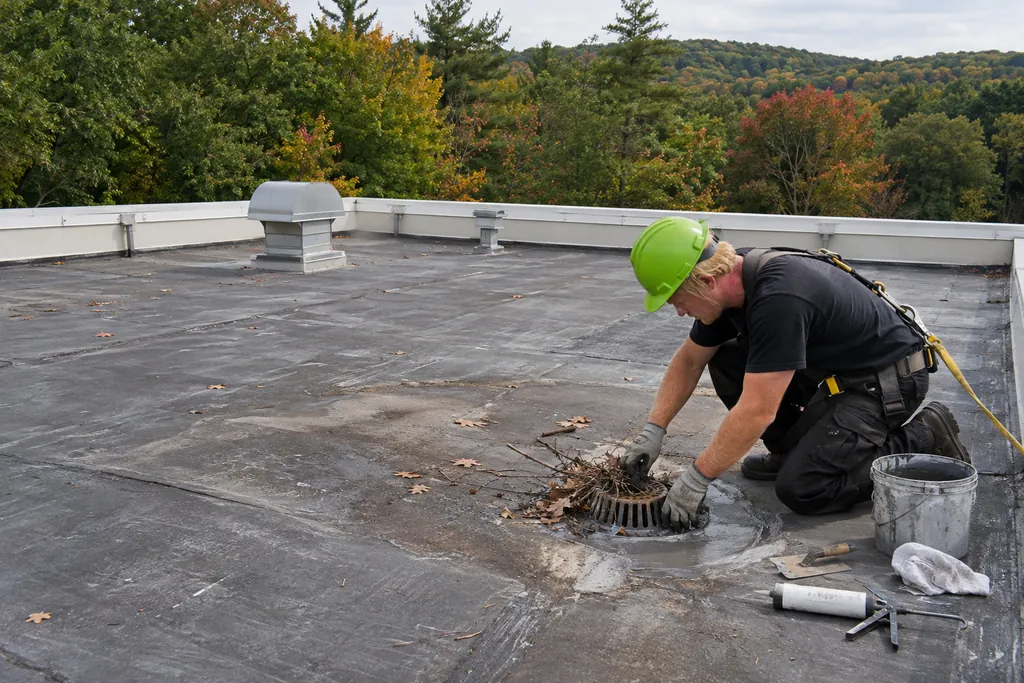
Office and warehouse wings on flat membrane get seam, drain, and wall flashing repairs.
Flat Roof Repair in Waterbury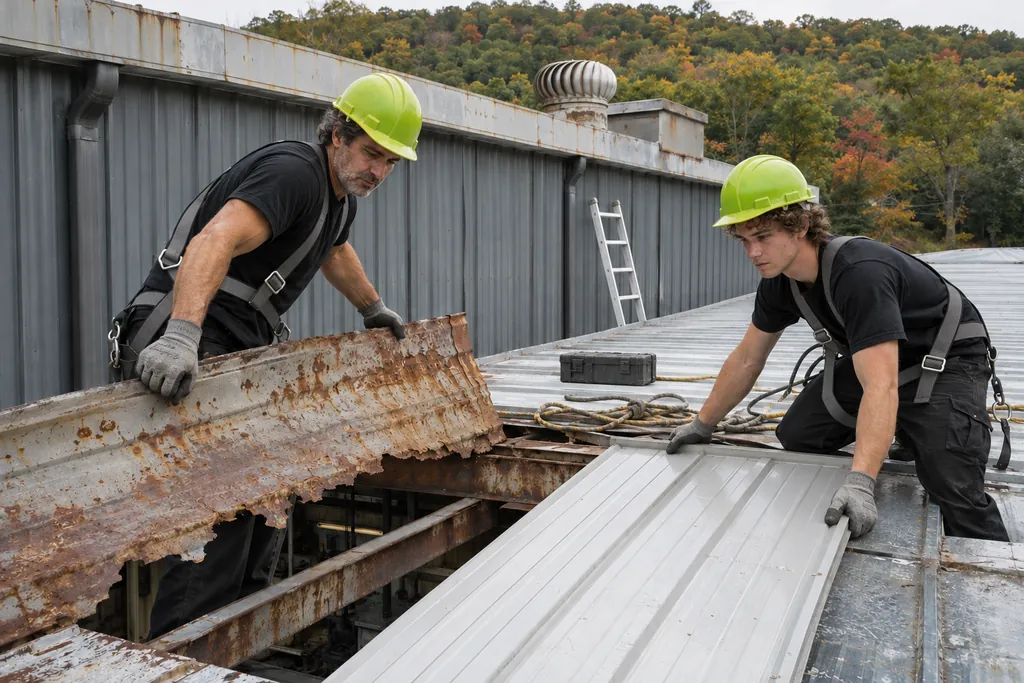
Metal process buildings and storage sheds get fastener, lap, and panel repairs.
Commercial Metal Roof Repair in Waterbury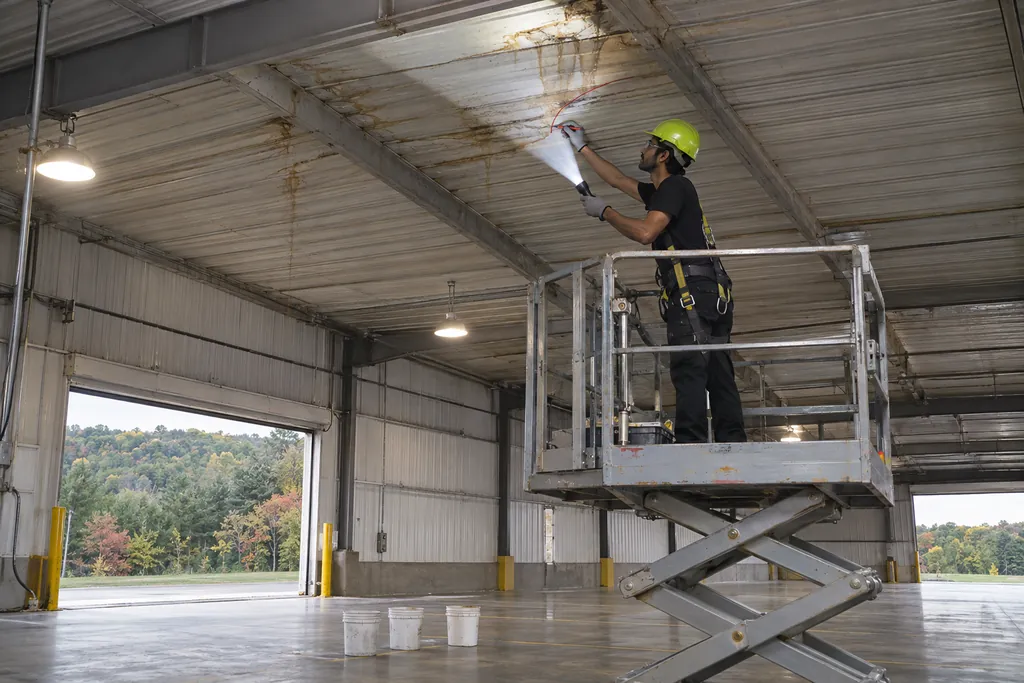
Drips over production that match no visible damage get traced before any repair starts.
Commercial Roof Leak Repair in WaterburyCost follows the number of penetrations involved, the condition of curbs and flashings, exposure to exhaust or chemicals, and access around running equipment. Working around production, fan lockouts, and crane or lift needs add to it too. An inspection sorts which repairs are urgent and which can be planned, which helps you budget.
Vibration, heat, and grease or chemical discharge are what damage the roof around exhaust fans. We repair or rebuild the curb, replace the flashing with material that stands up to the fan's discharge, and seal the base. Working with plant maintenance lets the fans be shut off and locked out safely during the work.
It covers clearing drains and gutters, checking flashings at curbs and walls, sealing small openings, tightening metal fasteners, and hauling off debris and abandoned equipment. We also log membrane wear near fans and walkways. Regular upkeep keeps small problems from turning into leaks over production and leaves you a record of the roof's condition.
The inspection covers membrane or panels, seams, flashings, curbs, drains, edges, and every penetration, plus the deck underside where it can be reached. Problems get photographed, marked on a roof plan, and sorted into urgent and planned work. Core cuts or moisture testing are added when wet insulation is suspected.
In most cases, yes. Repairs are scheduled around production, crews and material stay away from exhaust and intakes, and rooftop equipment shutdowns are set with plant staff. Hot work or adhesive odors near air intakes move to off-shifts when needed. Access, staging, and safety rules get agreed with the facility manager first.
Tell us about the roof and the equipment on it, and we will plan an inspection around your production schedule.