
If Your Roof
One Leak Over a Rack Aisle or Office
A single stain usually traces to one seam, pipe boot, or flashing upslope, and a targeted repair closes it.
Start WithCommercial Roof Leak Repair
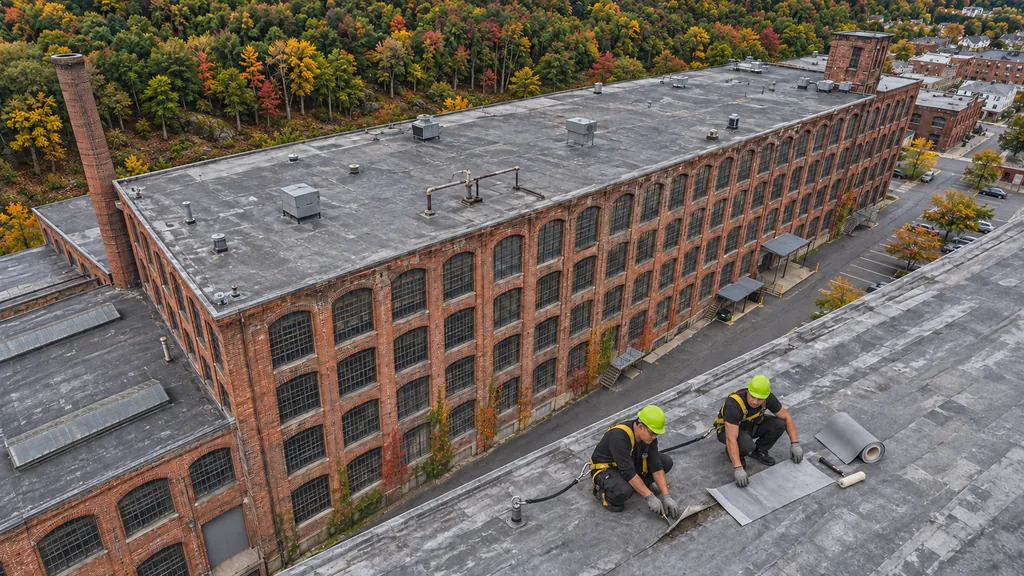
As a Waterbury commercial roof repair contractor, we find where water gets in and fix it, from one failed flashing to a cut-in section of membrane or metal.
Waterbury commercial roof repair fits most roofs with leaks at a few seams, curbs, or drains. These four cases show where we usually start on a building.
A single stain usually traces to one seam, pipe boot, or flashing upslope, and a targeted repair closes it.
Standing water days after a storm points to a blocked strainer, a high drain, or crushed insulation.
Loose fasteners and cracked washers let water run down the panel ribs and into the building.
When core cuts find wet insulation across most bays, patches stop holding and replacement becomes the honest call.
Every repair follows the same four decisions, made on the roof with you.
We walk the field, edges, drains, and every curb, then check the deck from below where we can reach it. Each problem gets photographed and marked on a roof plan.
Water runs along the deck before it drips, so we trace upslope from each stain to the seam, flashing, or penetration that let it in.
Small openings get a matched patch. Brittle membrane, rusted-through panels, or wet insulation in one area call for cutting that section out and replacing it.
After the repair, laps are probed, drains are run with water where possible, and the roof plan is updated with what was fixed.
Four repair services cover the roofs we see most on Waterbury shops, plants, schools, and mill buildings.
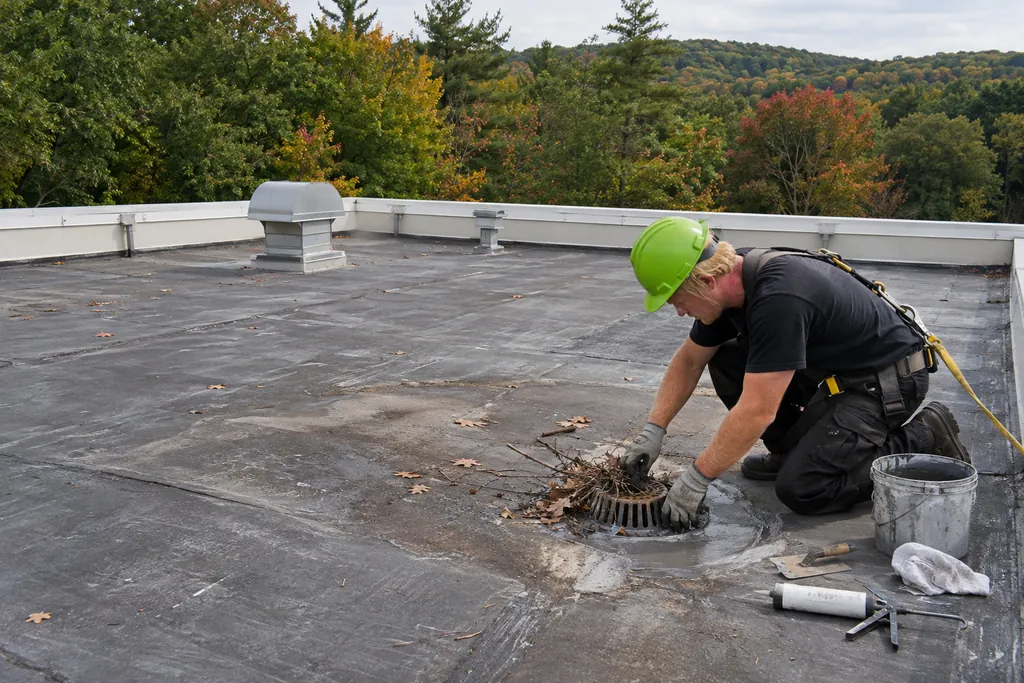
Built-up, modified bitumen, EPDM, and TPO roofs on low-slope buildings, where most leaks start at seams, drains, and wall flashing.
Common FixesShrunken membrane or wet insulation across most of the roof points to replacement.
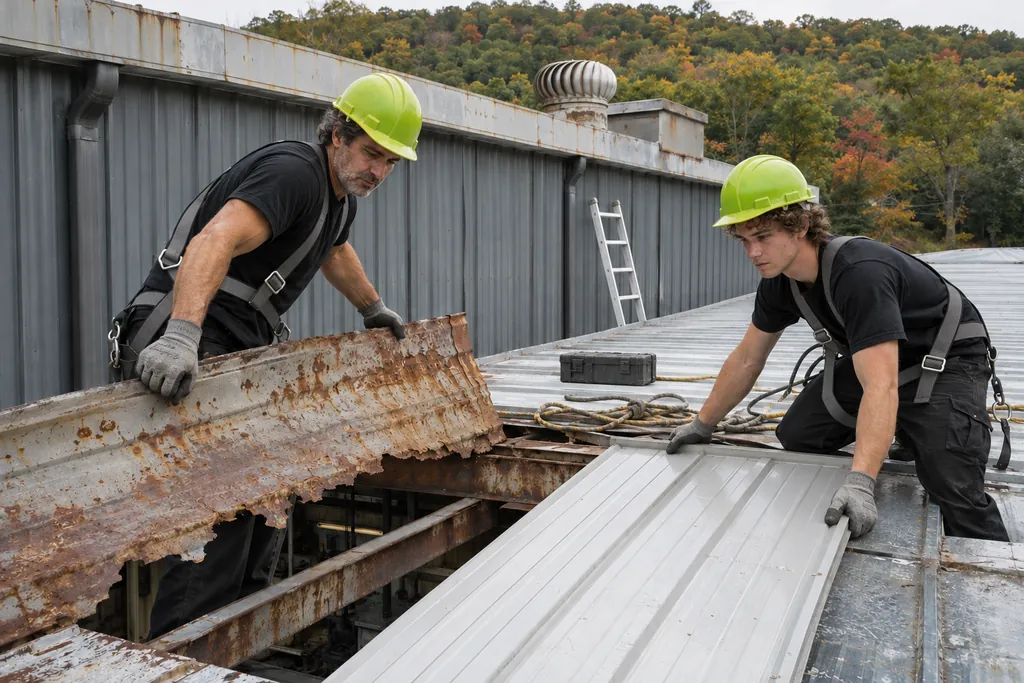
Exposed-fastener and standing seam panels on shops, warehouses, and garages that leak at screws, laps, and trim.
Common FixesRust-through on most panels or failing purlins calls for re-roofing that section.
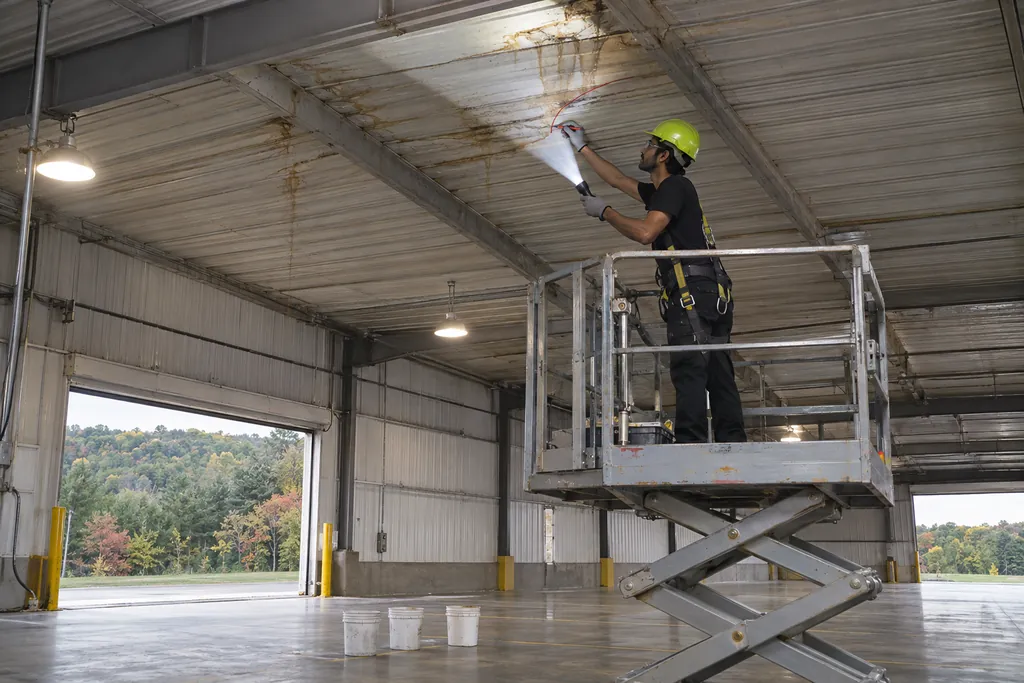
Tracing water from a ceiling tile back to the seam, curb, drain, or penetration where it actually enters the roof.
Common FixesLeaks that move to new spots after every repair mean the roof needs a wider plan.
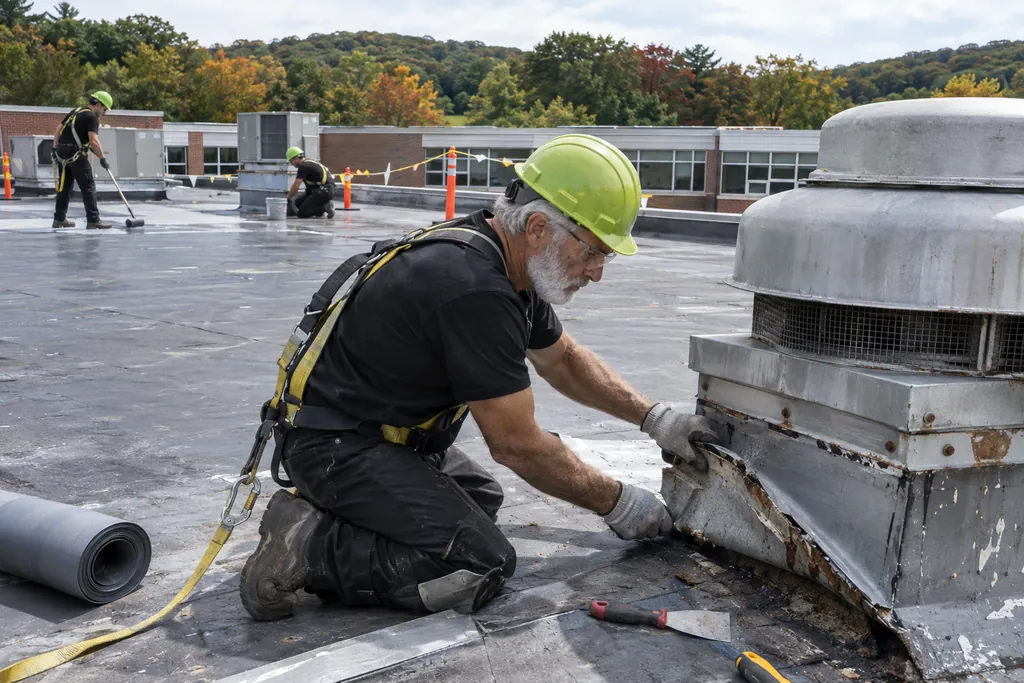
Plant and factory roofs crowded with exhaust fans, curbs, and piping, repaired in step with production and plant safety rules.
Common FixesRotted deck under equipment or wide chemical damage needs a structural or replacement scope.
Tell us what you see inside and where it shows up, and we will plan the roof visit, the ladder or lift, and the first places to check.
Each failure below has a matching repair, so the work goes where the roof is failing.
Winter movement pulls at weak laps until water reaches the insulation.
Seams are cleaned, rewelded or resealed, and checked with a probe along the full length.
Shaded drains freeze first, and meltwater backs up under the flashing.
Drains are cleared and reflashed, and lowered with tapered insulation where they sit high.
Snow drifts over low curb flashing and feeds water into the curb base.
Curbs are reflashed, and low ones are raised so the flashing top stays above drifting snow.
Rust that starts at a lap creeps under the next panel out of sight.
Rusted-through panels are replaced with the same profile, and the laps get new sealant and fasteners.
Old masonry parapets let water in behind the membrane at the wall.
Wall flashing is stripped in again, and coping joints are sealed or the coping is replaced.
These five parts of a roof are where we look first, and where most repair calls start.
Loose edge metal, split coping joints, and wall flashing that has pulled away from brick let water in behind the roof at the perimeter.
Open laps, blisters, and splits from shoveling show up in the open field. Each one gets cut, patched, or rewelded to match the membrane.
Clogged strainers, loose clamping rings, and drains set above the roof surface leave ponding water that freezes and stresses nearby seams.
Curbs, pipe boots, exhaust fans, and skylights carry the most flashing per square foot, so they need checking on every visit.
Wet insulation stays hidden until core cuts or a moisture meter find it. Soaked boards get cut out and replaced before the deck rusts.
Is your building near Waterbury? We repair commercial roofs across the towns below; for anywhere else, call us or send us a message.
Leaks, open seams, worn flashing, torn membrane, blocked drains, and loose or rusted metal panels on commercial buildings around Waterbury. Flat, metal, and industrial roofs are all part of the work. Every job starts by tracing the water back to where it gets in, which is often well away from the stain.
Repair makes sense when the trouble sits in a few seams, flashings, or one section and the insulation below is mostly dry. Replacement makes sense when leaks keep moving or core cuts show wet boards across large areas. Our photos and marked roof plan let you compare both before you decide.
Yes. We cut out the damaged area, install matching membrane or metal, tie it into the roof around it, and flash the edges. The surrounding roof has to be in good shape for the new section to bond, and we check that before any cutting starts.
That comes down to the lease wording. Some leases put roof repairs on the landlord, some on the tenant, and some split routine upkeep from major work. Read which party the lease names, ask your attorney or property manager if it is unclear, and we will work with whoever signs off.
Inside, watch for new ceiling stains, sagging tiles, water at columns, and doors that start to stick. Outside, look for ice packed at drains, membrane torn by shovels, bent gutters, and lifted metal panels. Leave snow removal to a trained crew, and call us when damage shows.
That turns on how much work the repair involves, so ask the city before larger jobs. Waterbury building permits come from the Department of Inspections, and the 2022 Connecticut State Building Code covers applications filed since October 1, 2022. A small leak fix and a section replacement can be treated differently.
Tell us where the roof leaks and we will set up a visit to find the source and price the repair.