
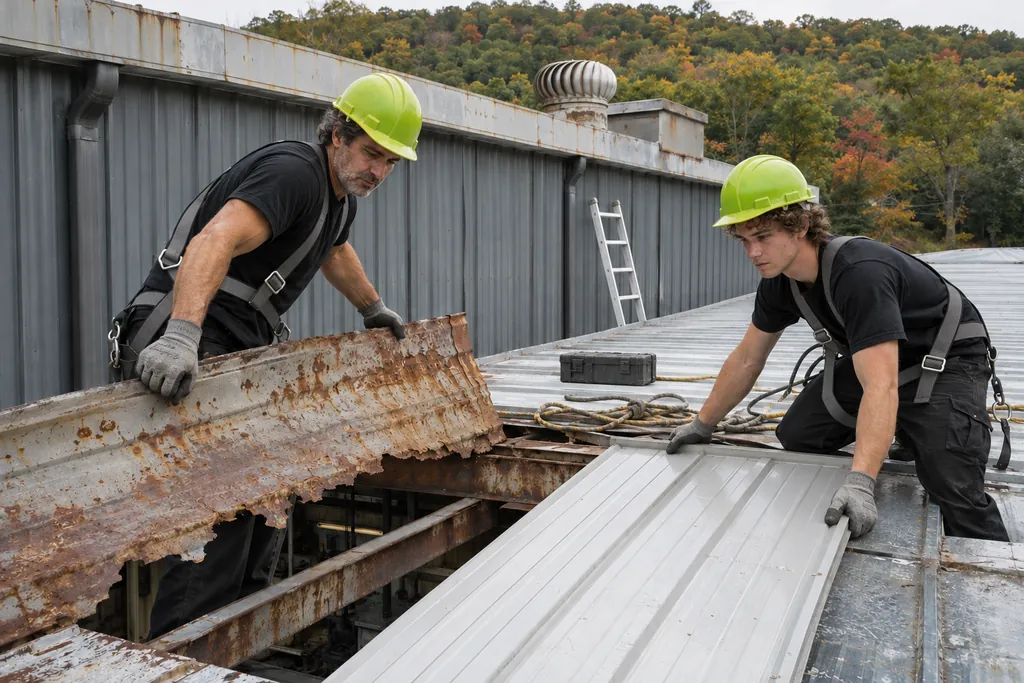
Commercial Metal Roof Repair
Screw-down metal roofs on shops and storage buildings get fastener and lap work in any season.
Commercial Metal Roof Repair in Waterbury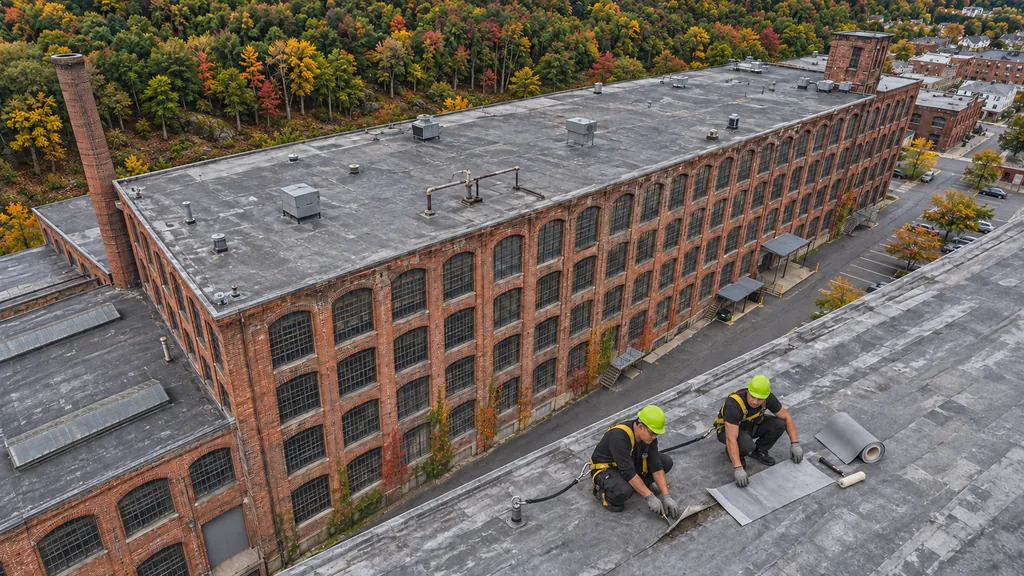
Oakville commercial roof repair keeps going through the winter: some fixes go on in the cold, and the rest get a temporary seal until a warm, dry stretch.
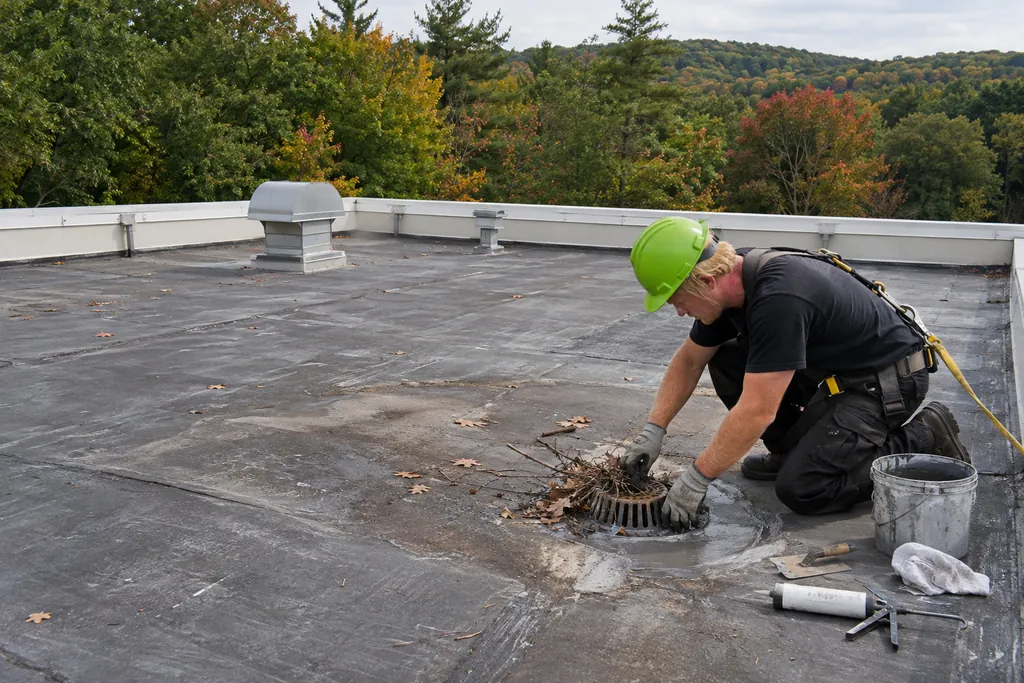
Oakville commercial roof repair calls pick up when snowmelt refreezes at drains and gutters, and many of those leaks can be fixed right away.
Screws, metal laps, and mechanically fastened flashings go on in the cold. Adhesives, primers, and some sealants need warmer, dry days, so those parts get a temporary seal and a date on the calendar.
Each roof zone has its own winter problem, and its own answer for what can be fixed now.
Ice builds behind parapets and at eaves, then melts into open joints on sunny afternoons. Coping and trim screws can be replaced in any weather.
Seams that open in the cold get a temporary cover until it warms up. Heat-welded TPO seams can be rewelded on many winter days when the sheet is dry.
Drains and scuppers freeze first along shaded walls. Clearing ice and resetting strainers stops the backup, and drain flashing waits for a dry day.
Snow drifts against rooftop unit curbs and buries the flashing top. Curb flashing gets checked after each heavy snow and repaired as weather allows.
Melting snow finds any wet insulation and drips through days later. Moisture readings in winter mark the spots for spring repair.
These cold-weather failures have repairs that work now or hold until spring.
Snowmelt refreezes at the cold eave and backs water up under the panel ends.
Eave trim and closures are replaced, and end laps get new sealant on the first dry day.
A frozen drain sends meltwater looking for the lowest open lap.
Ice is cleared, strainers are reset, and drain flashing is redone when the roof is dry.
Membrane shrinks in deep cold and pulls apart at weak laps.
A temporary cover goes on now, and the seam is welded or taped once temperatures allow.
Daily freezing and thawing backs fasteners out of metal panels and trim.
New screws with new washers go in right away, since fastener work can be done in the cold.
These services handle most of the winter calls we get from Oakville.
Screw-down metal roofs on shops and storage buildings get fastener and lap work in any season.
Commercial Metal Roof Repair in Waterbury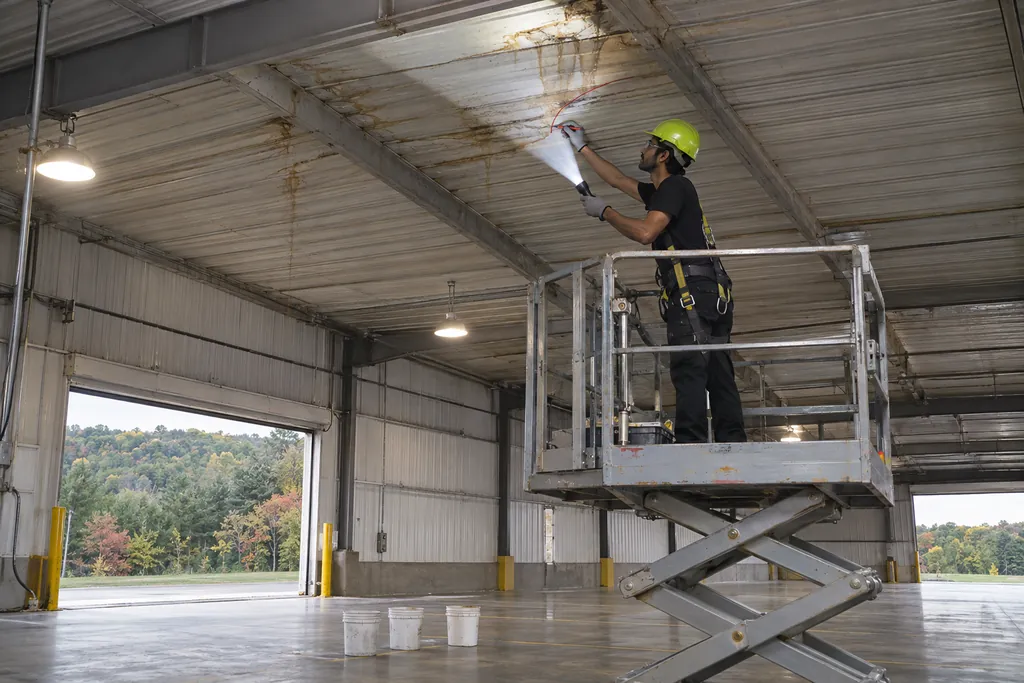
Leaks from snowmelt get traced in winter, even when the permanent repair waits for spring.
Commercial Roof Leak Repair in Waterbury
Production buildings get repairs timed around both the weather and their shutdown windows.
Industrial Roof Repair in WaterburyTell us where the meltwater shows up and whether the roof is under snow, and we will plan what can be fixed on the first visit.
Cold weather adds one decision to every repair: what goes on today.
Once the roof is safe to walk, we check drains, eaves, curbs, and seams, and take moisture readings near any drip.
Fasteners, metal laps, and ice at drains get handled now. Seams and flashings that need adhesive get a temporary seal.
Permanent membrane repairs go on the calendar for the first stretch of dry days warm enough for primers to cure.
Both visits go onto one roof plan, so you can see the temporary repair and the permanent one in the same place.
Winter or summer, we repair commercial roofs in the towns listed here. For a building outside them, call us or send us a message.
Yes, for many repairs. Fastener replacement, metal lap work, trim, and ice clearing all go ahead in the cold. Repairs that rely on adhesives, primers, or some sealants wait for a warm, dry stretch, and the leak gets a temporary seal in the meantime.
Snow removal from the work area, shorter working days, and the need for a temporary seal before the permanent repair all add to winter cost. The roof type, the size of the damage, and access to the roof hatch or ladder matter just as they do in summer.
Call when the leak starts. Winter visits find the source while it is active, stop the worst of the water, and line up the permanent repair for the first workable stretch. Waiting lets meltwater soak more insulation.
A trained crew with the right tools and fall protection, never staff with shovels. Shovels and ice picks tear membrane and break seams, which turns one leak into several. We can point out the drains and edges that need clearing first.
Sun melts snow on the roof, and the water runs to drains or eaves that are still frozen. It backs up under laps and flashing until it finds a way in. Clearing the drains and sealing those laps usually stops it.
Tell us what the roof is doing this winter, and we will fix what we can now and schedule the rest.