
If Your Roof
Drips Under the Ridge After Every Rain
Ridge caps and closures lose sealant first, and wind-driven rain blows right past them.
Start WithRidge and Trim Repair
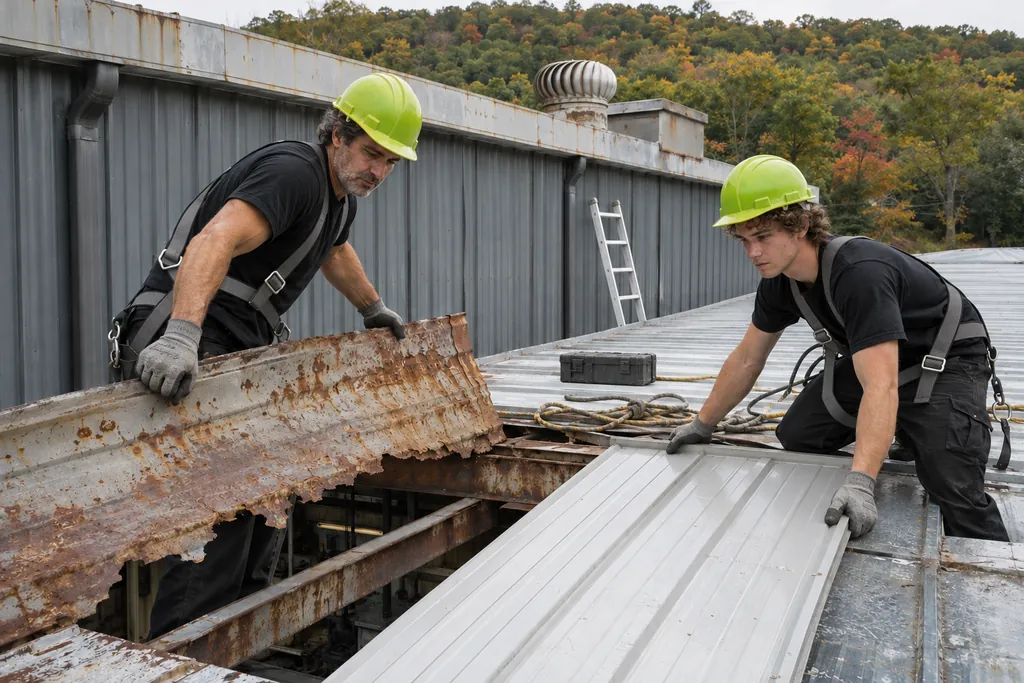
As a Waterbury commercial metal roof repair contractor, we replace failed screws, reseal laps, and cut in new panels on exposed-fastener and standing seam roofs.
Waterbury commercial metal roof repair works while most panels and the framing under them are solid. These four roofs show where the work begins.
Ridge caps and closures lose sealant first, and wind-driven rain blows right past them.
End laps trap water and grit, so rust there spreads under the panel above.
Fiberglass skylight panels crack and their fasteners loosen, letting water in at the side laps.
Panels that flex underfoot or show holes across the field have outlived spot repairs.
Metal roofs fail at predictable places, and these five zones get checked on every visit.
Eave trim and rake flashing take the worst of ice and wind. Loose trim screws and open closures let snowmelt run back under the panels.
Side laps and end laps open as panels shrink in the cold and grow in summer heat. We add stitch screws and fresh sealant along the lap.
Gutters and valley gutters rust from the inside, and ice dams push water over their back edges into the wall cavity below.
Pipe flashings, curb jacks, and skylight panels break the panel run and need their own boots or curbs to keep water out.
Condensation on the panel underside can drip like a leak. We check insulation facing and purlins from inside before blaming the roof.
Each repair matches the panel profile and fastener pattern already on the roof.
Backed-out screws come out, oversized fasteners with new washers go in, and abandoned holes get sealed with a matching patch.
Laps are cleaned to bare metal, butyl tape or sealant is laid in, and stitch screws pull the panels back together.
Rusted-through sections are cut out between purlins, and new panels of the same profile are lapped in at both ends.
Cracked skylight panels and loose ridge or eave trim are replaced, with new closures so wind cannot push water past them.
These failures show up on most older metal roofs we see, and each has a direct repair.
Neoprene washers harden and split, so screws stop sealing even when tight.
Every failed screw gets a new fastener and washer, sized up where the hole is stripped.
Daily heating and cooling slides panels against each other until the sealant tears.
Laps get new tape or sealant and stitch screws, so the panels stay pressed together.
Standing grit and meltwater eat through gutter seams and end caps first.
Gutter sections are resealed or replaced, and outlets are cleared so water leaves quickly.
Snowmelt refreezes at cold eaves and pushes water up under the panel ends.
Eave closures and trim are replaced, and end laps at the eave get fresh sealant.
Note where drips land and when they start, and we will bring matching panels, fasteners, and sealant to the first visit.
The same four decisions run through every metal roof repair.
Fastener rows, laps, trim, gutters, and penetrations get checked on the roof, and purlins and insulation get checked from inside where they are visible.
Most can. If the steel is solid and the rust is local, we repair it. If panels flex or show holes across the field, we price replacing that section.
Replacement panels and screws are matched to the rib spacing, gauge, and color, so new metal laps tightly into the old.
Laps and screws get sealed, trim gets refastened, and each repair goes onto your roof plan with photos.
Metal buildings often need one of these at the same visit.
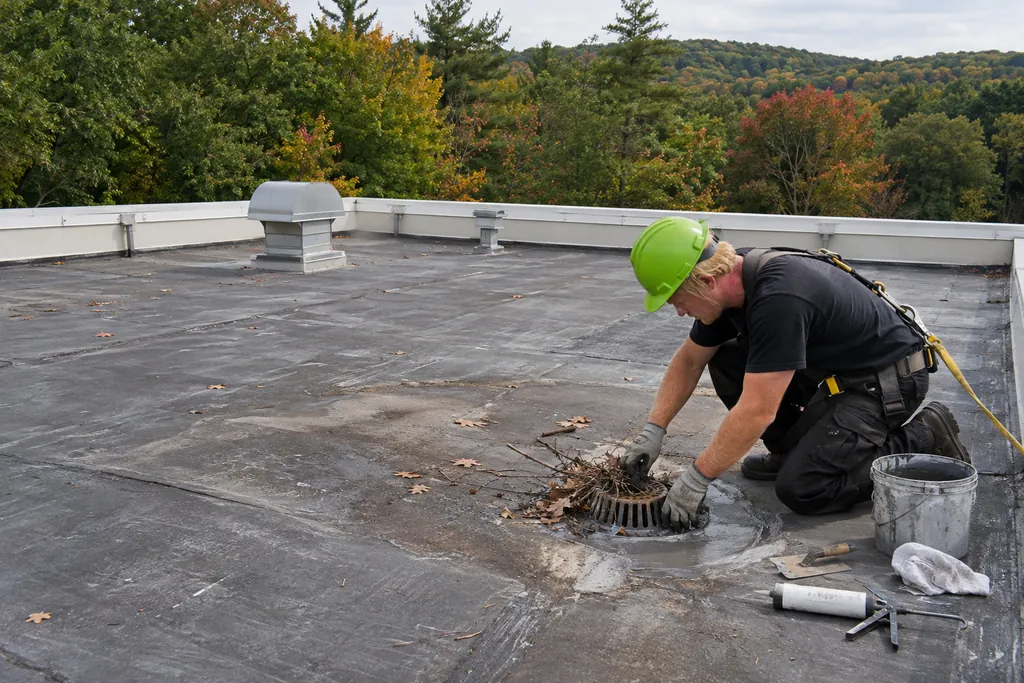
Office additions and lean-tos with flat roofs often meet the metal roof at a joint that leaks.
Flat Roof Repair in Waterbury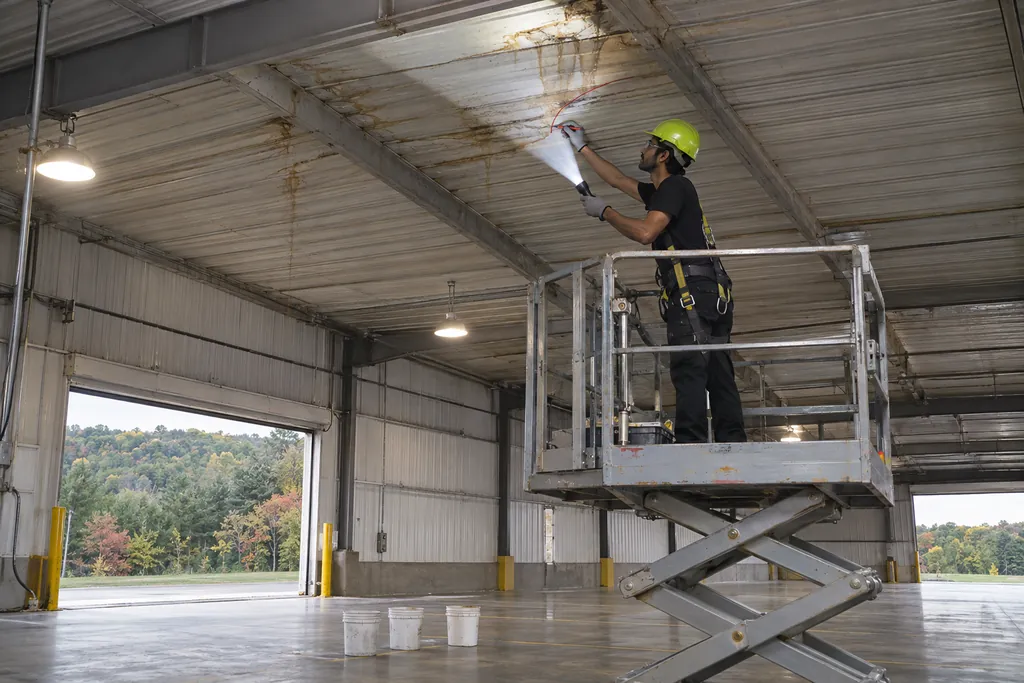
Water that shows up far from any loose screw gets traced from inside before we open a single lap.
Commercial Roof Leak Repair in Waterbury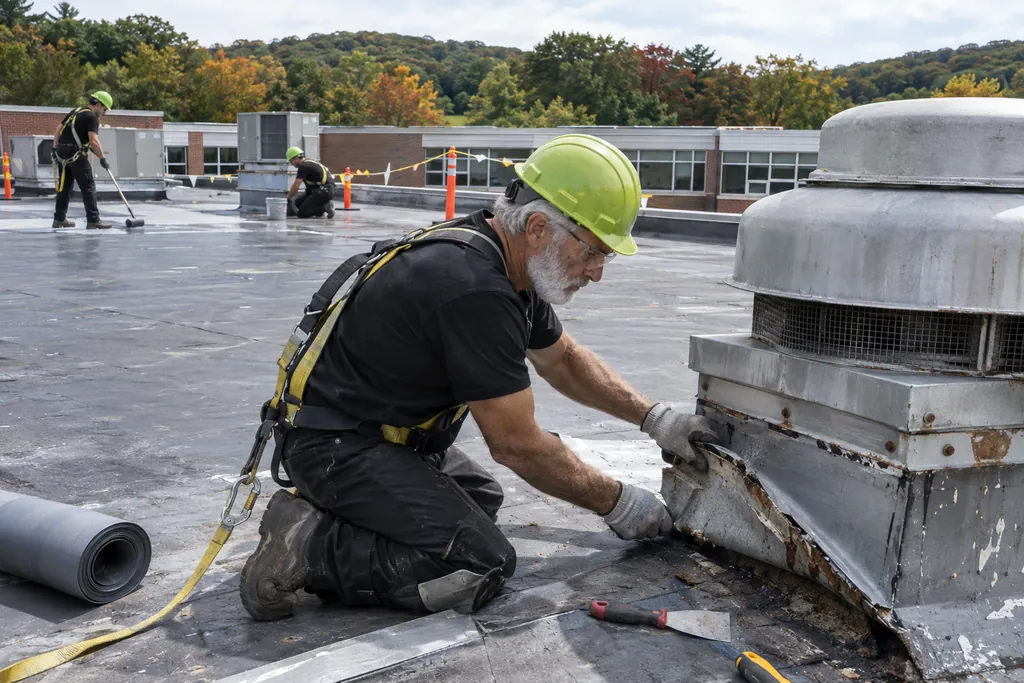
Process buildings with fans and stacks through the metal get curbs and boots rebuilt around them.
Industrial Roof Repair in WaterburyUsually, yes. Loose fasteners, worn washers, open laps, rusted panels, damaged trim, and bent gutters are all repairable. We replace damaged panels with matching profiles, reseal seams, and swap fasteners. Repair stays the better choice while most panels and framing are solid; rust-through across the roof points to larger panel replacement.
Most leaking screw holes come from backed-out fasteners, cracked washers, or holes that wore oval as the panels moved. We pull failed screws, drive new fasteners with new washers, size up where holes are stripped, and seal any empty holes. Eave and ridge rows move most in freeze-thaw, so they get checked first.
Replace a panel when rust has eaten through, when the steel is thin enough to flex or tear, or when rust has spread under the laps. Surface rust can be cleaned, treated, and sealed instead. Rusted-through panels get cut out, replaced with the same profile, and flashed at the laps.
Cold shrinks metal panels and heat expands them, and over the years that movement opens side and end laps. We clean the lap, replace the screws along it, lay in a compatible sealant or tape, and add stitch screws where panels have separated. On standing seam roofs we also check the clips and reseam where needed.
Twice a year, in spring and fall, catches most trouble before it leaks: loose screws, open laps, rust spots, and debris in gutters. Add a check after heavy snow, ice, or a strong storm. Small fixes found on those visits cost less than repairing ceilings and stock after a season of drips.
Send us the panel type and where it drips, and we will check the fasteners, laps, and trim on your metal roof.